


Scientific Name:
Quercus spp.
Other Names and Related Species:
American White Oak, Carvalho branco do norte, carvalho branco do sul
Description of the Tree:
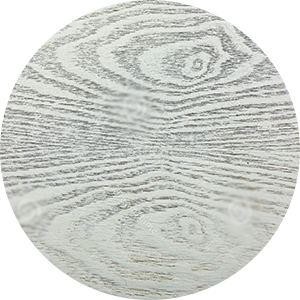
The white oak is similar in color and appearance to European oak. The sapwood of the American white oak is light, and the heartwood has shades ranging from light brown to dark brown. The white oak, most of the time, presents straight veins with bigger rays than the ones of the red oak and for this reason it has more drawings.
Physical Properties:
A hard and heavy wood, with medium resistance to flexibility and impact. It has low stiffness but, on the other hand, is very good for steam bending. Southern white oak grows faster, has wide concentric rings and the wood tends to be harder and heavier.
Specific gravity: 0,68
Average weight: 769 Kg/m3
Average volumetric shrinkage: 12,6%
Elasticity modulus: 12273 Mpa
Hardness: 6049 N
Region of Occurrence:
Across the eastern United States. The family of white oaks is formed by several species, among which about eight are commercial.
Durability:
The heartwood of white oak is resistant to decomposition and extremely resistant to treatment with preservatives. The sapwood is moderately resistant to treatment.
Availability:
USA: easily available, although not as abundant as red oak.
Export: widely available as sawn timber and laminate, in a full range of categories and specifications. It is the most important hardwood for export.
Workability:
White oak wood is suitable for good mechanical work, it can be nailed and screwed easily, although it is advisable drill it first. Galvanized nails are recommended because this wood reacts to iron. Its adhesive properties vary, but, painted and polished, it offers a good finish. It dries slowly and much care must be taken to avoid cracks. Because of its high degree of shrinkage, it can be susceptible to a variation in yield.
Suggested Uses:
Construction, furniture, flooring, architectural carpentry, exterior carpentry, frames, doors, kitchen cabinets, panels, railroad beams, wooden bridges, barrels, coffins and safes.
White oak can vary in color, texture, characteristics and properties according to the area in which it grows. Therefore, it is recommended that users and specifiers work together with suppliers to ensure that the wood they are ordering fits their specific needs. Wood from the north and south can be sold separately.
Source: REMADE