


Scientific name:
Quercus spp.
Other names and related species:
American red oak, Carvalho vermelho do Norte, carvalho vermelho do Sul.
Tree Description:
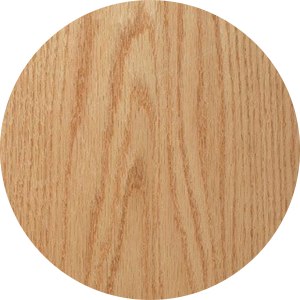
The color of the red oak sapwood varies from white to light brown, while the core is a pinkish brown. The wood is – in general appearance – similar to white oak, but with a slightly less sharp design, a product of smaller Medullary rays. Wood is usually straight ribbed and has a rough texture. Red oak is named after the color of its autumn leaves.
Physical properties:
The wood is hard and heavy, with medium strength and stiffness to flexibility, as well as high impact strength. Black well for steam bending. Southern red oak grows faster than Northern red oak and tends to be harder and heavier.
Region of Occurrence:
It is distributed throughout the eastern United States. Oaks are by far the largest group of species in the hardwood forests of the East. Red oaks grow in greater abundance than white oaks. The group of red oaks is formed by several species, among which about eight are commercial.
Natural Durability:
It is classified between non-resistant and little resistant to decomposition of the core, being moderately easy to treat with preservatives.
Availability:
USA: abundant. It is the most used species.
Export: good availability as sawn wood and as laminated, being, however, less than the availability of white oak. Red oak is usually classified according to growing regions and marketed as “Northern Red Oak” and “Southern Red Oak”.
Workability:
Red oak is easily suited to mechanical work. It is simple to nail and screw in, although it is recommended to use the drill first. It can be painted and polished to a good finish. It dries slowly and has a tendency to separate and warp. Shrinkage is high and is susceptible to variation in yield.
Indications for Use:
Construction, furniture, flooring, architectural interiors, joinery and interior moldings, doors, kitchen cabinets, panels, coffins and safes. Not suitable for airtight barrels. Red oak can vary in color, texture, characteristics and properties depending on the growing region, so it is recommended that users and specifiers work closely with suppliers to make sure the wood they are ordering fits their specific needs.
Source: REMADE