


Scientific Name:
Nectandra rubra (Mez) C.K. Allen., Lauraceae.
Other Names and Related Species:
Louro-Rosa, Louro-Gamela, Gamela, Canela-Vermelha, Louro-Canela, Louro-Mogno, ltaubão, Mogno-tabasco-falso. No other species resembles Nectandra rubra. Synonymy: Ocotea rubra.
Foreign Nomenclature:
Determa (Guyana, Honduras); Wana (Guyana); Red Louro (Guyana, Great Britain); Baaka, Bewana (Suriname); Grignom-Rouge (French Guyana)
Description of the Tree:
The tree reaches an average height of 20 to 30 m and a diameter of 60 to 90 cm. Its bark is thin and integrated, with a reddish hue. It presents wide root system, producing commercial logs with 12 to 25 m in length.
Wood Characteristics:
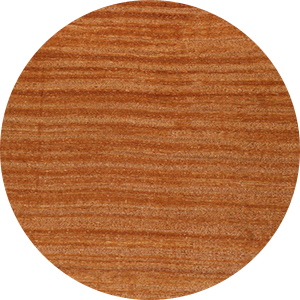
Heartwood has a color ranging from reddish-brown to orange-brown. Its surface is irregular and glossy; it has a medium texture and straight or diagonal grain. Imperceptible taste and smell.
Region of Occurrence:
The Louro-vermelho wood is typical of the dryland forests; frequent in the lower Amazon, common in the region of Belém and Amapá to the Guyanas.
Physical-Mechanical Properties:
The wood is heavy, reasonably durable, receiving an average classification as to retractability and mechanical strength.
Behavior During Drying:
Air-drying is slow and prone to warping and cracking. Artificial drying is also slow and internal hardening and cracking can occur if the process conditions are drastic. This difficulty in drying is due to the presence of essential oils in the wood.
Workability:
Wood without major problems in processing, both manually and with machines. It accepts well nails and screws. It does not present gluing problems and receives a good finish.
Suggested Uses:
In civil construction as slats, rafters, boards in general, frames, ceilings and paneling; furniture and similar articles, sliced corrugated sheets, plywood, etc. Because of its appearance, it can replace mahogany, also being similar to Cedar. When sawn in the radial direction, it presents an attractive design.
Source: REMADE