


Scientific Name:
Cariniana legalis.
Description of the Tree:
Shape: semi-caducipholia tree, 10 to 25m high and 60 to 100cm of DBH, exceptionally reaching 60 m high and 400 cm of DBH, when it reaches adulthood. It is one of the largest trees in the Southeast Region.
Trunk: straight, cylindrical and columnar. The trunk is up to 20 m high or more.
Branching: racemeous. Large, globe-like canopy in the shape of an umbrella. Dense and bright foliage, with horizontal branches, supports many orchids and bromeliads. The new leaves are reddish.
Bark: up to 50 mm thick. The outer bark is dark brown or brown, rough, rigid and deeply grooved. The inner skin is reddish.
Wood Characteristics:
Apparent specific mass: the jequitibá-rosa wood is moderately dense (0.50 to 0.65 g/cm³), at 15% humidity. (Pereira & Mainieri, 1957; Mainieri & Chimelo, 1989).
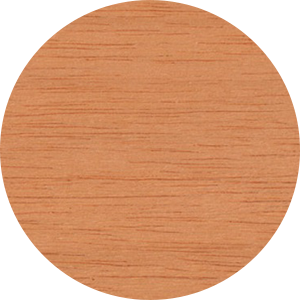
Color: sapwood slightly differentiated from the heartwood, usually light beige. Heartwood is usually pink-brown or beige-pink, or even dark-pink beige, eventually with brownish shadows.
General characteristics: irregularly glossy surface and slightly rough to the touch; medium and uniform texture; straight grain. Imperceptible smell and taste.
Natural Durability: low resistance to attack by wood boring organisms, when exposed to adverse conditions.
Preservation: low to moderate permeability to preservative solutions, when submitted to pressure impregnation.
Other Characteristics:
• The stem of the jequitibá-rosa consists of 76% wood and 24% bark.
• The wood has similar application to that of cedar (Cedrela fissilis), however it is slightly inferior.
• In the beginning of the 90’s, jequitibá-rosa sawn timber was worth about US$ 750 a cubic meter in the Vitória, ES market (Jesus et al., 1992).
Related Species:
Cariniana legalis is a related species of Cariniana estrellensis, from which it is differentiated by its smaller fruits and leaves.
Products and Uses:
Sawn and round wood: jequitibá-rosa wood can be used in plywood, cut sheets, laminates, furniture and frames, internal finishing, carpentry, woodworking, indoor work, construction, window frames, lining, general use planks; matches, school supplies, boxes, heels for shoes, barrels, clogs, toys, pencils and broom handles.
Energy: produces poor quality firewood.
Pulp and paper: this species produces pulp for good quality paper, with a Cron Beran pulp content of 58.7% and lignin content of 24.2% (Biella, 1978). The fibers of the cellulose pulp presented an average length of 1.35 mm and an average width of 0.020 mm.
Resin: resin is extracted from the bark.
Tanning substances: tannin is extracted from the bark.
Natural Occurrence:
Latitude: 7º S (Paraíba) to 23º S (São Paulo).
Latitudinal variation: from 30 m in the coast of the Southeast and Northeast Regions to 1.000 m of altitude, in São Paulo and Minas Gerais.
Source: REMADE