


Scientific Name:
Tabebuia impetiginosa (Mart.) Standl., Bignoniaceae.
Other Names and Related Species:
The Tabebula genus has about 60 species occurring throughout the Tropical Americas, from Mexico to Argentina. In general, the species with dense and dark wood are called, indistinctly, lpê, Pau-d’arco and Ipeúna, sometimes adding the name of its color when blossoming (Ipê-roxo, Ipê-amarelo). A common name in several South American countries is Lapacho.
Description of the Tree:
A tree normally 8 to 10 m high when isolated; in the forest it can reach up to 30 m high and 100 cm in diameter. Thick and rigid bark, dark brown in color, grooved lengthwise and fissured across.
Wood Characteristics:
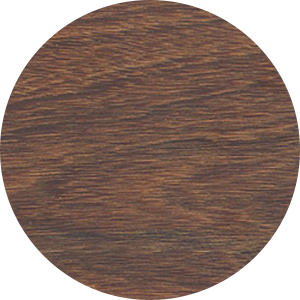
Heartwood is brownish-blond or light-brown, generally uniform, and it usually presents greenish reflections. The surface is not very glossy and is smooth to the touch; the texture is fine to medium, uniform; the grain is straight to reverse, and the smell and taste are imperceptible.
Region of Occurrence:
Of the most common species, T. impetiginosa occurs from the Northeast to the state of São Paulo; T. heptaphyfla is more restricted to the south of Bahia, Espírito Santo and Rio de Janeiro. T. serra-tifolia and T. ipe has a wider distribution, from the North/Northeast region to the South region.
Physical-Mechanical Properties:
This wood is very heavy and tough, with high mechanical resistance and low volumetric retractability. It is resistant to insect attack and rotting.
Behavior During Drying:
Air-drying is medium to fast and presents small cracking and warping problems. Artificial drying can aggravate the occurrence of defects.
Workability:
Moderately difficult to work with, especially when using hand tools, which quickly lose their edge. It gets a good finish. Gluing problems are reported. Dust released during processing can cause dermatitis.
Suggested Uses:
Ipê wood can be used in external projects for use as poles, stakes, supports, pillars, crossbeams and general structures; in civil construction in the form of beams, rafters, slats, door and window markers, frames, clubs, floorboards and similar; common furniture, turned parts, tool handles, car bodywork, shipbuilding, musical instruments, stair steps, bowling balls and etc.
Source: REMADE