


Scientific Name:
Apuleia Ieiocarpa (Vog.) Macbr.
Genus:
Leguminosae-Caesalpiniaceae
Commercial Names:
BRAZIL: garapa, garapeira, muirajuba, muiratauá, amarelinho, gema-de-ovo, grápia, jataí-amarelo, garapa-amarela, cumarurana e barapibo.
Origin:
It grows from Bahia to the Southern Region of Brazil, Argentina, Uruguay and Paraguay. Another very similar species, A . mofaris, is found in the Amazon, mainly in the State of Pará.
Wood:
Moderately heavy (density 0.83 g/cm3 ), tough, easy to work, long lasting, but can be attacked by termites.
General Characteristics:
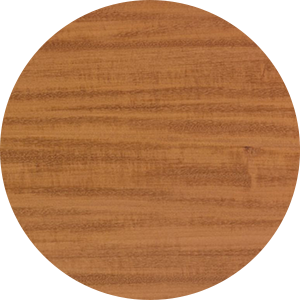
Heavy wood; heartwood ranging from beige-yellow or slightly pinkish yellow to pink-brown, uniform; differentiated sapwood, white-yellowish; medium texture; irregular grain for coating; glossy and smooth surface to the touch; imperceptible smell and taste.
Morphological characteristics:
25-35 m high, with trunk ranging from 60-90 cm in diameter, composed of opaque leaves, 5-11 leaflets with a length of 5-13 cm.
Drying:
Moderately difficult to air-dry, prone to cracks and warping.
Workability:
Wood considered to be easy to work with. Receives good finish.
Durability:
Good, but prone to small deformations and cracks. In laboratory tests, GARAPA wood showed moderate resistance to rotting and low resistance to dry wood termite attacks.
Preservation:
GARAPA wood, in laboratory tests, when submitted to pressure impregnation, proved to be of low permeability to preservative solutions.
Uses:
GARAPA wood, due to the fact that it is quite heavy, of moderate natural durability, of mechanical resistance between medium and high, is recommended for the construction of external structures such as poles, stakes, posts, truck bodywork; in civil construction, as beams, rafters, slats, boards and floors tiles; door and window frames etc.; beer barrels, tool handles; naval construction, such as structures, keels, etc.
Interesting Uses:
When the tree grows in isolation, it acquires a leafy canopy and can be used in landscaping in general.
Source: REMADE