


Scientific Name:
Cordia goeldiana Huber, Boraginaceae.
Other Names and Related Species:
Frei-Jorge. It is confused with Cordia frichotoma wood, which grows in coastal forests between Bahia and Santa Catarina, which is known as Louro-pardo, Louro-amarelo and Louro-da-serra, Freijó-branco, Freijó-preto, Freijó-rajado, Freijó-verdadeiro, Cordia-preta.
Foreign Nomenclature:
In international trade it is known as Brazilian Walnut, Cordia wood and Jenny wood.
Laurel-blanco (Central America), Freijó, Salmwood (Great Britain), Pardillo (Venezuela)
Description of the Tree:
Cylindrical, straight trunk tree, with a commercial height of 7 to 26 m and a diameter ranging from 45 to 61 cm. In optimum growth areas, it can reach up to 90 cm in diameter and 40 m in height.
Wood Characteristics:
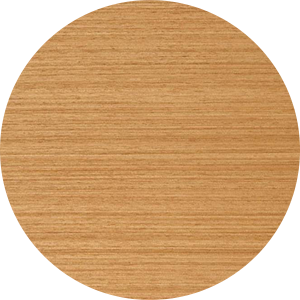
Heartwood with a yellowish-brownish color or even light-brownish color, uniform or with darker strips that are very faded and parallel, rarely showing a pinkish hue. The sapwood is brownish or grayish-white, with a thickness ranging from 1.5 to 5.0 cm. Medium texture, usually straight grain, glossy surface and moderately rough to the touch.
Region of Occurrence:
It occurs more frequently in the State of Pará: at the extreme northeast, lower regions of Tocantins and tributaries, and in the region of Marabá, its occurrence in high altitude forests with firm land outside this region is rare.
Physical-Mechanical Properties:
Freijó wood can be classified as medium weight, low retractability and medium mechanical strength.
Behavior During Drying:
It is considered to have an easy to moderate drying capacity, with a slight tendency to warping and cracking.
Workability:
Easy sawing, levelling and bonding. Smooth surface finish.
Suggested Uses:
Furniture industry (rounded panels, sliced panels, furniture), paneling and civil construction in general, small aircraft propellers, etc. For some applications it is used as a substitute for mahogany.
Source: REMADE