


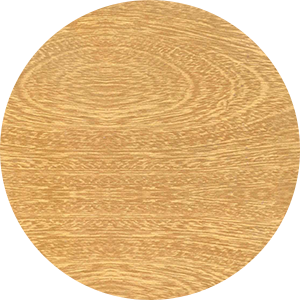
Scientific Name:
Amburana cearensis(Fr.All.) A.C.Smith.
Family:
Leguminosaea Papilionoideae
Other Names and Related Species:
BRAZIL: Cerejeira-rajada, amburana, cumaru-do-ceará, cumaré, cumaru-das-caatingas, imburana-de-cheiro, umburana, amburana-de-cheiro, imburana e cumaru-de-cheiro.
Origin:
Northeast of the country in the caatinga (ES) and (MG) in the rain forest of the Vale do Rio Doce and in the limestone outcroppings and deciduous forests of the states of (MG), (GO), (TO), (MS), (MG) and (SP). In the southwest of the Amazon forest (RO, AC and AM), there is the Amburana acreana (Ducke) AC Smith species with characteristics very similar to this species.
Wood:
Moderately heavy ( 0.60 g/cm3 density), reddish-brown trunk and is easy to cut.
General Features:
Straight to irregular grain, coumarin-scented.
Morphological Characteristics:
Height of 4-10 m in the caatinaga and 10-20 m in the rainforest and deciduous forests, with trunk of 40-80 cm in diameter. Composite leaves, 10-15 cm long; follicles in numbers of 11-15, 1-2 cm long.
Workability:
It’s very good to work with.
Durability:
Moderately durable when exposed to the elements.
Uses:
Its wood is used for fine furniture, decorative sliced panels, coffins, sculptures, counters and joinery in general.
Source: REMADE