


Scientific Name:
Gochnatia polymorpha.
Description of the Tree:
Shape: Evergreen tree, 3.5 to 10 m high and 20 to 40 cm DBH. Adult specimens can reach up to 15 m in height and 60 cm of DBH.
Trunk: its trunk is rarely straight; almost always irregular to canaliculate, tortuous and inclined. The stem is usually short, up to 6 m long, usually with multiple trunks.
Branching: irregular, dichotomous, sympodial. Low cup, densified, rounded, with light green foliage.
Bark: up to 30 mm thick. The outer shell is brownish, with deep longitudinal grooves and detachment in irregular plates (Ivanchechen, 1988). The internal bark is olive-colored and fibrous.
Wood Characteristics:
Apparent specific mass: the cambará wood is moderately dense (0.60 to 0.77 g/cm³), at 15% humidity (Mainieri & Chimelo, 1989).
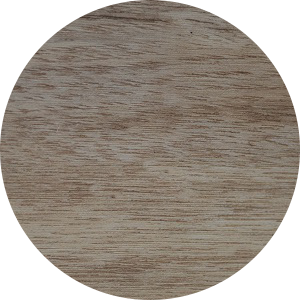
Color: highlighted sapwood, gray-white. The freshly polished heartwood is light yellow, darkening to light beige with yellowish spots, tending to a uniform lightly pinkish brown.
General Features: Smooth to the touch surface, with little pronounced shine; fine texture; straight to irregular grain. Imperceptible smell and taste.
Durability: wood with high resistance to the attack of wood boring organisms, presenting high natural resistance in contact with the soil.
Preservation: wood with low permeability to preservative solutions, under pressure treatment.
Other Characteristics
Generally, it has little sapwood; when in advanced age, it has a high proportion of heartwood.
Related Species:
Gochnatia H.B.K. is a pantropical genus, with about 66 species and various subspecies and varieties; Neotropical species occur from the Antilles to Argentina. Cabrera & Klein (1973) distinguish two subspecies for G. polymorpha: subsp. ceanothifolia and subsp. floccosa.
In Brazil, besides Gochnatia polymorpha, other species of the genus occur, among them:
• Gochnatia barrosii Cabr., known as cambará, found in the Cerrado in Minas Gerais and in São Paulo.
• Gochnatia cratensis (Gardn), in Serra do Araripe, in Ceará.
• Gochnatia lucida (Baker) Cabrera, known as candiá and located in the mountains, in Ceará and in Pernambuco (Pereira et al., 1993).
• Gochnatia paniculata (DC.) Cabrera, known as cambará, arvoreta do capão, found in fields, within Paraná and in São Paulo, with blooming from November to December. There is a very famous candeia in Minas Gerais, of the same family, however, of another genus: Vanillosmopsis erythropappa (DC) Selt. et Bib.
Products and Uses:
Sawn timber and roundwood: cambará wood can be used in construction, supports, frames, hooks, stakes, lining, slats, clubs, carvings, turned pieces and in shipbuilding. Both the trunk and the roots produce excellent curves for ship hulls (Boiteux, 1947). Although the trunk is generally tortuous, it is widely used in the construction of fences, such as posts and external works. It is also suitable for energy poles.
Energy: produces good quality firewood and coal.
Pulp and paper: species unsuitable for this use.
Natural Occurrence:
Latitude: 14º S (Bahia) to 31º S (Rio Grande do Sul).
Latitudinal variation: from 20 m in Rio Grande do Sul to 1,650 m of altitude in São Paulo.
Source: REMADE