


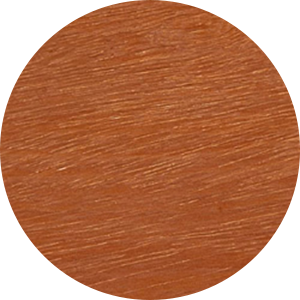
Group: can include the Vatairea (V.guianensis, V. paraenses, V. sericea) and Vataireopsis spp. and V. speciosa genus, marketed indistinctly as angelim-amargoso.
Note: in Brazil, angelim-amargoso woods belong to the Vatairea and Vataireopsis genus, which produce heavy, hard, yellow-brown to reddish-brown woods, with a strong bitter taste. These woods are sold indistinctly as angelim-amargoso. As these woods are similar in their characteristics and in the market they have the same value, in this form they are treated together.
Other names: amargoso, angelim, fava, fava-amarela, fava-amargosa, faveira, faveira-amarela, faveira-bolacha, faveira-de-impigem, faveira-grande-do-igapó.
Occurrence: Brazil – Acre, Amapá, Amazonas, Mato Grosso, Pará, Rondônia, Roraima.
GENERAL FEATURES
Sensory characteristics:
Heartwood and sapwood distinguished by their color, yellow-brown or reddish-brown heartwood; fibrous appearance; imperceptible smell; bitter taste, high density; straight to irregular grain; coarse texture (IPT, 1989b).
Anatomical macroscopic description:
• Axial parenchyma: aliform paratracheal visible to the naked eye, with long and wide lateral extensions, forming short oblique confluences and eventually tending to form strips
• Radius: visible only under lens, on top and tangential side, irregular stratification may occur
• Vessels: visible only under lens, at the top and on the tangential side; diffuse porosity, few, medium, eventually large, solitary and multiple, these are occasionally in radial chains
• Growth layers: not very distinct, marked by thin strips of marginal parenchyma (IPT, 1983)
DURABILITY / TREATMENT
Natural durability: The heartwood is highly resistant to rotting and the action of dry wood termites (IPT, 1989a). Wood susceptible to attack by drills and marine organisms (Prospect, 2003).
Treatability: During laboratory tests and pressure treatments, it has shown to be moderately permeable to preservative solutions (IPT, 1989a).
PROCESSING CHARACTERISTICS
Workability: The angelim-amargoso wood presents a moderately good behavior in mechanical processing but presents a tendency to raise fibers when planed (IBAMA, 1997a). Turning, drilling and nailing operations are easy (IPT, 1989b).
Drying: air-drying at moderate speed results in little or no defects. Rapid drying in an oven, with a moderate tendency to medium curling and twisting (IBA¬MA, 1997a).
PHYSICAL PROPERTIES
Mass density:
Apparent at 15% humidity: 936 kg/m3 (IBAMA, 1997a)
Shrinkage:
Radial: 4,8% / Tangential: 9,8% / Volumetric: 14,0%
In order to compare these shrinkage values (CCOPANT) with those obtained by the ABNT Standard (CABNT) it is necessary to transform them using the equation: CABNT = CCOPANT / (1 – CCOPANT / 100)
MECHANICAL PROPERTIES
Bending:
• Resistance
– Green wood: 119,5 MPa (1219 kgf/cm2)
– Wood at 15% humidity: 148,5 MPa (1514 kgf/cm2)
– Elasticity modulus – Green wood: 13435 MPa (137000 kgf/cm2)
Compression parallel to the fibers:
• Resistance
– Green wood: 54,8 MPa (559 kgf/cm2)
– Wood at 15% humidity: 77,8 MPa (793 kgf/cm2)
Other properties:
• Shearing – Green wood: 14,2 MPa (145 kgf/cm2)
• Janka hardness – Green wood: 6816 N (695 kgf)
• Normal fiber traction – Green wood: 3,9 MPa(40 kgf/cm2)
Note: the results of the physical and mechanical property tests were obtained according to the COPANT standard. (Source: IBAMA, 1997a)
Note: The MPa and N size units of the International System (IS) are also presented in the kgf/cm2 and kgf technical units, respectively.
USES
Construction:
• Heavy external: railroad crossbeams, stakes
• Heavy internal: rafters, beams
• Lightweight internal, structural: slats
• Temporary use: scaffolding, shoring, concrete formwork
Furniture:
• High quality: decorative furniture parts
Other uses:
• decoration and adornment
• decorative plates
• vessels (keels, decks, sides and vaults)
• packages
• tool handles
It can replace other woods used in heavy external and internal civil construction projects, light exterior and interior structures, decorative and of general utility, such as angelim-pedra, angelim-vermelho, angico, cedrinho ou quarubarana, cupiúba, garapa, itaúba, jacareúba, louro-vermelho, muiracatiara, pau-roxo and tauari.
Source: REMADE