


Scientific Name:
Juglans nigra.
Other Names and Related Species:
American Black Walnut, Nogueira negra, nogueira americana
Description of the Tree:
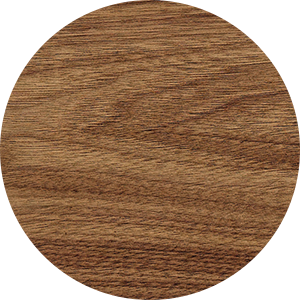
The walnut sapwood is creamy white, while the color of the heartwood ranges from light brown to dark chocolate brown, sometimes with a purple shade and darker knots. The walnut wood can be supplied without being steamed or steamed to darken the sapwood. The wood usually has a straight grain, however, on some occasions it presents a wavy grain or deformations that produce attractive and decorative designs.
Physical Properties:
It is a strong, sturdy medium density wood with moderate resistance to flexibility and impact as well as low stiffness. It is classified as a good wood for steam bending.
Specific gravity: 0,55
Average weight: 609 Kg/m3
Average volumetric shrinkage: 10,2%
Elasticity Modulus: 11584 Mpa
Hardness: 4492 N
Region of Occurrence:
Along the eastern United States, but the main commercial region is in the middle states. One of the few American species that can either be planted or regenerated naturally.
Durability:
The walnut is classified as “very resistant” to heartwood decomposition; is one of the most durable woods even under conditions favorable for decomposition. The sapwood is susceptible to moth attack.
Availability:
USA: reasonable, with regional limitations.
Export: reasonable in both sawn and laminated wood.
Workability:
The walnut wood can be easily worked, with both hand tools and machines. It is easy to nail, screw and glue. It perfectly retains dyes and paint and, when polished, offers an excellent finishing. If dried slowly and carefully, it is possible to avoid wastage during oven drying. The walnut wood has a good dimensional stability.
Suggested Uses:
Furniture, cabinets, architectural interiors, high quality joinery, doors, floors and panels. It is a very suitable wood for use in contrast to light colored construction woods.
Source: REMADE